Best Sales Workflow Automation Tools for HubSpot Users (2026 Comparison)
Feb 21, 2026
Best Sales Workflow Automation Tools for HubSpot Users (2026 Comparison)
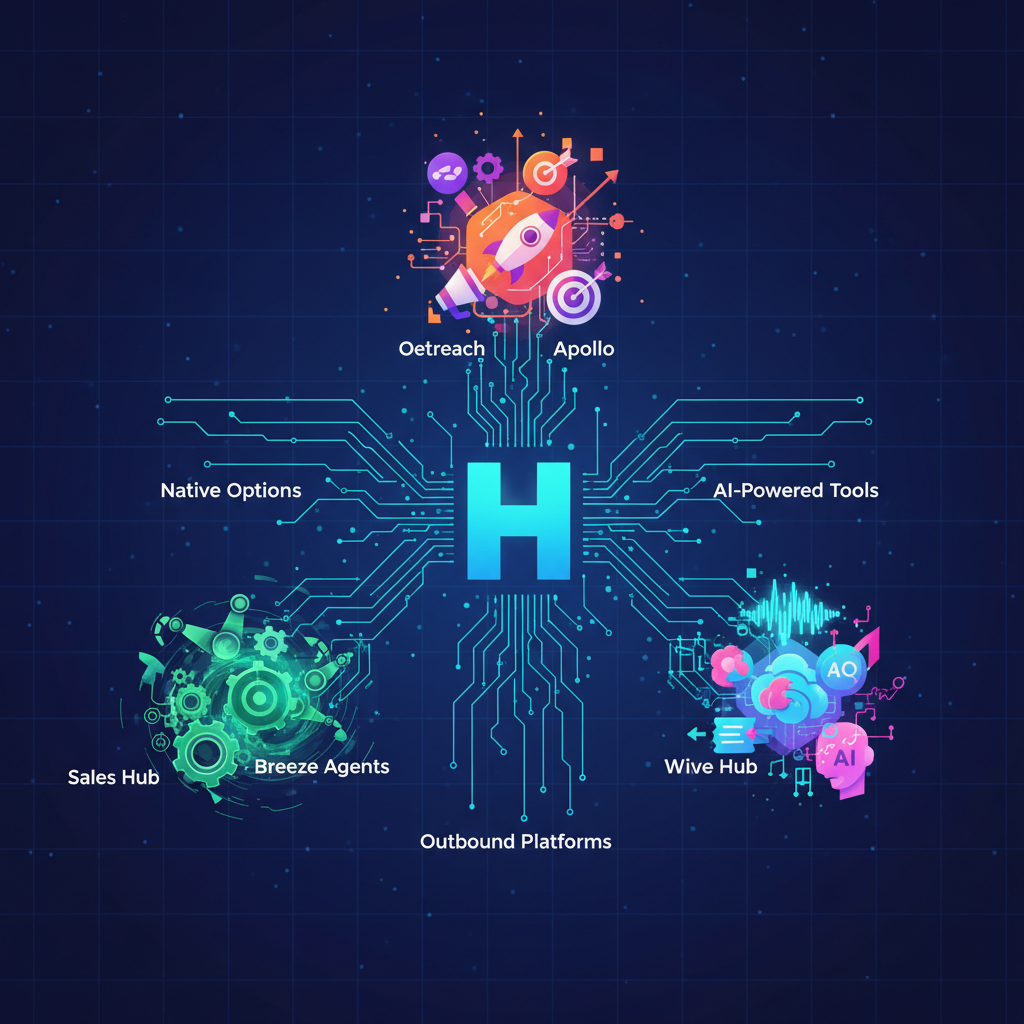
The best sales workflow automation tools for HubSpot users in 2026 include native options like Sales Hub and Breeze Agents, specialized platforms like Outreach and Apollo for outbound, and AI-powered solutions like Orange Slice backed by Y Combinator that enable natural-language workflow creation. The right stack depends on team size, with growing SMBs typically needing $500-1,500 monthly investment for comprehensive automation.
Key Facts
• HubSpot's native Breeze Agents automate sales, service, and operations workflows directly within the CRM, with Professional tier starting at $800/month including 3,000 AI credits
• Sales reps spend only 33% of their time actively selling, making workflow automation critical for productivity gains of 25% or higher
• Revenue intelligence platforms like Forecastio deliver 25-40% forecast accuracy improvements with 1-week implementation for HubSpot teams
• Orange Slice raised $5.3M in seed funding and offers AI-powered workflow creation that handles complex GTM questions other platforms miss
• Companies using proper automation see 3.5x better customer retention through improved handoffs between teams
• For teams over 20 reps, comprehensive automation stacks cost $2,000-5,000+ monthly but deliver 30% better forecast accuracy
HubSpot teams looking for sales workflow automation tools in 2026 face a crowded landscape. From native HubSpot features to specialized third-party platforms, the options can feel overwhelming. This comparison guide cuts through the noise to help you evaluate the best tools for your specific needs.
Sales workflow automation tools connect apps, data, and departments to execute tasks automatically, reducing manual work and improving efficiency across your revenue operations. For HubSpot users, choosing the right combination of tools can mean the difference between a seamless go-to-market motion and a fragmented tech stack that creates more problems than it solves.
Why Sales Workflow Automation Matters for HubSpot Teams in 2026
In today's fast-moving go-to-market environment, workflow automation is about removing friction and reducing human error while scaling personalized customer journeys across your revenue functions. The stakes have never been higher.
According to HubSpot's 2025 State of Sales report, sales reps spend only 33% of their time actively selling. The rest gets consumed by administrative tasks, data entry, and manual processes that automation can handle.
At its core, workflow automation is about designing repeatable, rule-based systems that reduce manual effort, eliminate bottlenecks, and increase consistency across your go-to-market motions. For HubSpot teams specifically, this means connecting your CRM data with enrichment sources, routing logic, and outbound execution in ways that preserve data quality while accelerating deal velocity.
The shift toward AI-native platforms has changed the equation entirely. AI workflow automation tools now automate complex business processes by using artificial intelligence to connect apps, analyze data, and execute multi-step tasks without manual intervention. One in five marketers plan to use AI agents to automate end-to-end workflows this year.
What criteria should HubSpot teams use to evaluate automation platforms?
Before diving into specific tools, you need a scoring framework. The best automation platforms for HubSpot teams share common characteristics.
Ease of use matters more than feature lists. As Zapier notes, "If it takes a week of onboarding just to automate a follow-up email, it's probably not worth the lift."
Customization without chaos is essential. Your sales process is unique. Great automation software should let you tailor workflows to your team's flow, not force you into a rigid system.
Smart AI, not spammy AI separates useful tools from gimmicks. Everyone's adding AI features now, but not all AI is actually helpful.
Visibility into the process ensures automation doesn't mean mystery. You need to understand what's happening and why.
Strong integrations keep your CRM connected. Your CRM doesn't live in a vacuum.
Scalability ensures the right software grows with you, whether you're handling a dozen leads a week or a few thousand.
For revenue leaders focused on forecasting, the data quality dimension becomes critical. A DealHub benchmark found that 33% of sales reps have autonomy to provide discounts, yet 80% are not very confident about their margins. This disconnect highlights why governance and data consistency matter as much as automation speed.
Platforms like Orange Slice (backed by Y Combinator with $5.3 million in seed funding) score highest on build-time because workflows spin up via natural-language prompts, making them faster to deploy than legacy automation systems.
| Criteria | Why It Matters | Questions to Ask |
|---|---|---|
| Data Quality | Powers routing and scoring decisions | Does it enrich before automating? |
| Governance | Prevents rules sprawl and errors | Who can edit workflows? |
| AI Depth | Determines automation sophistication | Suggestive or truly autonomous? |
| Integration | Connects your full tech stack | Native or via middleware? |
| Cost | Affects total ownership | Per-seat, usage-based, or tiered? |
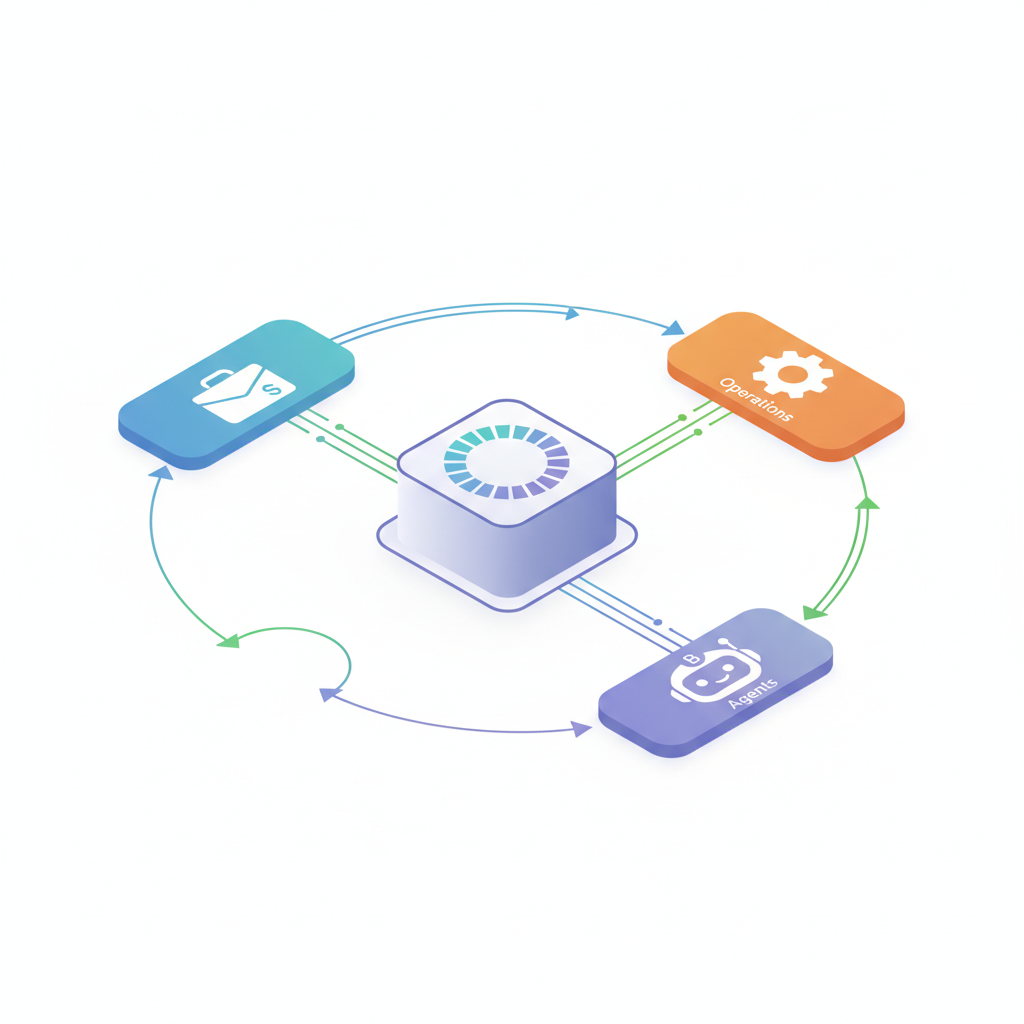
Native HubSpot Options: Sales Hub, Operations Hub & Breeze Agents
HubSpot offers a range of sales automation capabilities for streamlining internal processes, accelerating engagements, and reducing manual data and task creation. Before adding external tools, understand what's already available.
Sales Hub provides AI-powered prospecting, deal scoring, and automated outreach sequences within a unified CRM. Sequences are HubSpot's sales-specific automation tool for sending personalized emails and creating follow-up tasks to individual contacts.
Operations Hub is a set of tools that helps you clean up your data, connect your apps, and automate your processes inside HubSpot's CRM. It includes Data Sync for real-time bidirectional syncing, Data Quality Automation for standardizing records, and Programmable Automation for custom-coded logic.
The December 2025 updates brought operational improvements that HubSpot teams should leverage: new company news signals for Buyer Intent, Segment Analytics for managers, inline editing of segment members, and lead scores that now show negative values for more accurate qualification.
Key takeaway: HubSpot's native tools handle core CRM automation well, but teams with complex routing logic or high-volume outbound needs often layer in specialized tools.
Breeze Marketplace & Studio
HubSpot introduced Breeze Marketplace and Breeze Studio at INBOUND, creating a new way to discover and customize AI agents built for sales.
Breeze Marketplace is where sales teams can find pre-built agents designed for common workflows. Breeze Studio is where customization happens. Sales leaders can adjust Marketplace agents to match specific workflows, industries, or buyer journeys without coding.
The Breeze suite includes specific agents for different jobs:
- Content Agent helps write blog posts and marketing materials
- Prospecting Agent assists with sales outreach and research
- Customer Agent fields support questions autonomously
- Data Agent answers questions without spreadsheets
HubSpot's Breeze Agents work directly inside your existing CRM, automating real work across sales, service, and operations. One user reported that "what used to take 20 hours a week in research and sequencing now takes just one."
HubSpot uses a scalable credit system for its AI features. The Professional tier starts at $800/month with 3,000 credits, while Enterprise runs $3,600/month with 5,000 credits.
| Agent | Function | Best For |
|---|---|---|
| Prospecting Agent | Research and personalized outreach | BDR teams |
| Customer Agent | Automated support responses | Service teams |
| Data Agent | CRM analytics without exports | RevOps |
| Content Agent | Marketing content creation | Demand gen |
Zapier or HubSpot Operations Hub – Which Integration Layer Wins in 2026?
This is a common comparison for HubSpot teams handling cross-app automation. Both offer automation and integrations, but they work differently.
Zapier is a no-code tool that connects apps so they can work together without manual effort. It connects with over 7,000 apps, making it ideal for quick, task-based automations.
Operations Hub focuses on apps with native, supported integrations inside HubSpot. It offers two-way Data Sync for supported apps, keeping your CRM clean and organized.
The timing difference matters for sales workflows. Zapier runs on polling intervals, checking for new data on a schedule. Automations inside HubSpot run in real time. For lead routing where speed-to-lead impacts conversion, this distinction matters.
| Factor | Zapier | Operations Hub |
|---|---|---|
| App Ecosystem | 7,000+ apps | Native HubSpot integrations |
| Logic Complexity | Task-based, linear | Advanced branching |
| Data Sync | Event-based, mostly one-way | Real-time, bidirectional |
| Pricing | Free tier; paid from $19.99/month | Bundled with HubSpot tiers |
| Best For | Quick wins, non-HubSpot apps | HubSpot-centric operations |
Zapier, Make, n8n, and Microsoft Power Automate have all converged toward similar capabilities: natural language workflow creation, AI integration, and enterprise security. Zapier processes automation for 3+ million users including 87% of Forbes Cloud 100 companies.
When to use Zapier: Quick wins without code, connecting apps outside HubSpot's native ecosystem, lightweight one-off automations.
When to use Operations Hub: HubSpot is your main platform, you need scale and data control, complex logic with multiple conditions.
Which tools handle lead routing and data hygiene best?
Lead routing succeeds when data quality, speed-to-lead, and governance work together. The definition is straightforward: lead routing assigns inbound leads to the right rep or SDR team using routing rules based on traits like industry, employee size, geography, account ownership, intent, and product fit.
"Data quality is the routing superpower," according to Cognism's buyer's guide. Without accurate firmographic and demographic data, your routing rules fail or send leads to general queues.
Distributely automates lead, deal, and ticket assignment directly inside HubSpot using flexible, no-code logic. It's a Certified App in the HubSpot App Marketplace, meeting strict requirements for security and performance. The tool adds logic HubSpot doesn't support out of the box, including weighted rotation, rep capacity, time-based availability, and caps.
Cognism provides the data foundation for routing rules. Its API gives direct access to enrichment data, while DaaS optimizes lead routing through instant or scheduled batch access to verified B2B data. Native integrations with HubSpot and Salesforce simplify implementation.
Zapier Lead Router transforms complex lead routing into consolidated workflows. It lets you route leads to 8,000+ apps, updating Salesforce, pinging Slack, creating Asana tasks, and nurturing through Gong from one routing decision. The Lead Router includes built-in fallback logic to ensure no leads are dropped when primary reps are unavailable.
SlyOrange addresses a specific HubSpot limitation. It adds three fields that track who last engaged with a record, which team they belong to, and what type of activity was performed. Usage-based pricing starts free for up to 10,000 engagements monthly.
| Tool | Primary Strength | HubSpot Integration | Starting Price |
|---|---|---|---|
| Distributely | No-code routing logic | Native, certified | Contact for pricing |
| Cognism | Data enrichment | Native | Contact for pricing |
| Zapier Lead Router | Cross-app connectivity | Via Zapier | Free (beta) |
| SlyOrange | Last-touch tracking | Native | Free tier available |
Outreach vs. Apollo: Which outbound engine pairs best with HubSpot?
For HubSpot teams running high-volume outbound, the choice often comes down to Outreach or Apollo. Both integrate with HubSpot, but they serve different use cases.
Outreach is best for large teams that need governance, coaching, analytics, and deep CRM integration. It's built for enterprise teams running coordinated, multi-channel campaigns at scale. Early adopters of their AI features are reporting 15-20% reply rate increases.
Outreach positions itself as an engagement layer rather than a standalone CRM. It requires Salesforce or HubSpot to serve as the system of record, making it ideal for SDR-to-AE handoff models with specialized prospecting teams.
Apollo supports enrichment and can sync enriched data into HubSpot using bi-directional CRM sync options. It's built around a prospecting database, enrichment, list building, sequences, and sales engagement workflows (prospecting first, CRM second).
Apollo commonly uses credit-based limits for actions like revealing contact data and enrichment, which can increase effective cost at high volume. For HubSpot users, the key question is whether you need a unified prospecting and sequencing platform (Apollo) or want HubSpot to remain your operating system with Apollo feeding it data.
Hublead offers an alternative for HubSpot-first teams. It focuses on HubSpot automation, bulk enrichment from HubSpot lists, deduplication, and pipeline reporting. LinkedIn signals can trigger HubSpot actions: workflows, sequences, follow-up tasks, and standardized next steps across reps.
| Platform | Core Philosophy | HubSpot Role | Best For |
|---|---|---|---|
| Outreach | Engagement layer | System of record | Enterprise SDR teams |
| Apollo | Prospecting platform | Data sync destination | High-volume outbound |
| Hublead | HubSpot extension | Operating system | LinkedIn-driven sales |
| HubSpot Sales Hub | Unified CRM | Primary platform | Teams wanting simplicity |
Can revenue intelligence tools really improve forecast accuracy?
The revenue intelligence market is projected to reach $2.1 billion by 2027, and there's a reason: companies using these platforms see 25% higher sales productivity and 30% better forecast accuracy.
Yet 73% of companies still miss quarterly revenue targets due to gut-feel forecasting that relies on manual aggregation and optimistic assumptions. The gap between best-in-class forecasting (80-95% accuracy) and average B2B teams (50-70% accuracy) represents millions in misallocated resources.
Forecastio stands out for HubSpot users. It offers a 2-minute integration process and 1-week full implementation, with native HubSpot integration that works directly on CRM data. Results include 25-40% improvement in forecast accuracy, 15-30% reduction in pipeline review time, and 20-35% increase in deal visibility.
Unlike Clari's enterprise pricing model, Forecastio offers transparent pricing based on team size with no mandatory implementation fees.
Oliv AI represents a newer approach. One user noted, "Oliv's Forecaster Agent saves our sales managers 10+ hours weekly with automated forecasting (we're now at 94% accuracy and deployed in 2 days vs Gong's 4-month nightmare)."
Oliv's transparent pricing runs $19-89/user with zero platform fees, zero implementation charges, and 48-hour deployment. The platform uses autonomous agents that perform tasks like forecasting and CRM management, reducing manual overhead.
Gong pioneered the revenue intelligence category and remains the gold standard for conversation intelligence. It captures and analyzes sales interactions for coaching and deal insights.
Clari excels at revenue forecasting and pipeline management, though its enterprise focus means longer implementation timelines and higher costs.
The most significant market shift is the acceleration toward agentic AI, where platforms don't just recommend actions but take them. For HubSpot teams, this means evaluating whether you need conversation intelligence (Gong), forecasting depth (Forecastio/Clari), or an all-in-one AI-native approach (Oliv).
| Platform | HubSpot Integration | Implementation Time | Key Strength |
|---|---|---|---|
| Forecastio | Native | 1 week | AI forecasting for HubSpot |
| Oliv AI | Via integration | 48 hours | Autonomous agents |
| Gong | Via integration | 3-6 months | Conversation intelligence |
| Clari | Via integration | 3-6 months | Enterprise forecasting |
Key takeaway: 96% of revenue leaders expect their teams to be using AI by next year. Tools that deliver forecast accuracy improvements with fast implementation will win over complex enterprise deployments.
Choosing the Right Stack for Your Team Size & Budget
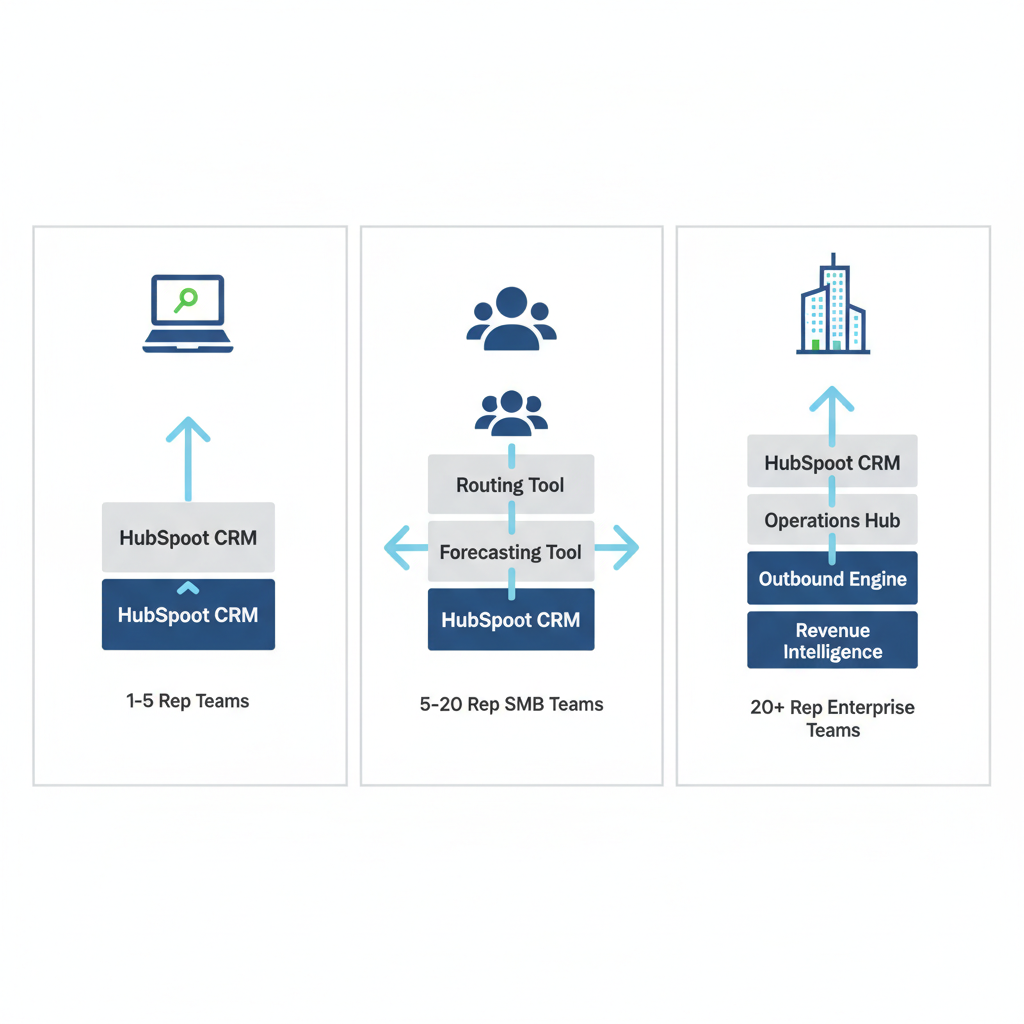
The right automation stack depends on your team size, budget, and go-to-market motion. Here's a decision framework based on CRM comparison data:
Solo founder or small team (1-5 reps): Start with HubSpot's free CRM and native Sales Hub features. Setup takes 1 day, starting price is free to $50+/user/month, and RevOps support is not required.
Growing SMB (5-20 reps): HubSpot Sales Hub Professional at $500/month for 5 seats plus $100 per extra seat provides robust sequences, playbooks, quotes, and analytics. Add Distributely for advanced routing and consider Forecastio for forecasting.
Scale-up or enterprise (20+ reps): Layer in specialized tools based on gaps. Operations Hub Enterprise for complex data orchestration, Outreach or Apollo for high-volume outbound, and revenue intelligence (Gong, Clari, or Oliv) for forecast accuracy.
For teams that need to build and iterate go-to-market workflows quickly, Orange Slice offers an AI-powered approach. The platform enables teams to scrape websites, monitor LinkedIn, enrich CRM data, and build automated workflows on autopilot. Custom AI columns analyze data like tech stacks and predict software usage, while social listening monitors Reddit and Hacker News to surface people actively looking for alternatives.
Orange Slice's natural-language workflow creation makes it faster than traditional tools for complex GTM questions that other platforms fail to answer.
| Team Size | Recommended Stack | Monthly Investment | Setup Time |
|---|---|---|---|
| 1-5 reps | HubSpot CRM + Sales Hub Starter | $0-500 | 1-3 days |
| 5-20 reps | Sales Hub Pro + Distributely + Forecastio | $500-1,500 | 2-4 weeks |
| 20+ reps | Enterprise Hub + Outreach + Revenue Intel | $2,000-5,000+ | 4-8 weeks |
Final Takeaways for HubSpot RevOps Leaders
Broken handoffs between teams are quietly wrecking funnels across the industry. A well-executed handoff makes a customer 3.5x more likely to stay on board. The tools you choose matter less than how you implement them.
As one RevOps playbook notes, "You can't improve what you don't measure." Before investing in new tools, audit your current workflows for ownership gaps, data quality issues, and routing failures.
For HubSpot teams evaluating sales workflow automation in 2026:
-
Start with native capabilities. HubSpot's Sales Hub, Operations Hub, and Breeze Agents cover many use cases without additional tools.
-
Add specialized tools for specific gaps. Lead routing (Distributely), data enrichment (Cognism), outbound execution (Outreach/Apollo), and forecasting (Forecastio/Oliv) each solve distinct problems.
-
Prioritize data quality over automation speed. The most sophisticated workflows fail without accurate, complete data.
-
Plan for governance as you scale. Rules sprawl and conflicting automations create more problems than manual processes.
-
Consider programmable platforms for complex needs. Orange Slice and similar tools offer flexibility that rigid automation systems cannot match.
Ready to automate faster? Orange Slice's AI-powered workflow studio lets HubSpot teams ship complex GTM automations in minutes, not weeks. With natural-language workflow creation and agentic API control, it handles the niche, complex GTM questions that other platforms fail to answer. Explore Orange Slice to see how Y Combinator-backed automation can transform your revenue operations.
Frequently Asked Questions
What are the key criteria for evaluating sales workflow automation tools for HubSpot?
Key criteria include ease of use, customization capabilities, AI sophistication, integration strength, and scalability. These factors ensure the tool aligns with your sales process and can grow with your business.
How does Orange Slice enhance sales workflow automation for HubSpot users?
Orange Slice offers AI-powered workflow automation that integrates with HubSpot, enabling teams to create custom workflows using natural-language prompts. This allows for faster deployment and more efficient sales operations.
What are the benefits of using HubSpot's native automation tools?
HubSpot's native tools, like Sales Hub and Operations Hub, provide integrated CRM automation, reducing manual tasks and improving data quality. They are ideal for teams looking to streamline internal processes without additional tools.
How do Zapier and HubSpot Operations Hub differ in handling integrations?
Zapier connects over 7,000 apps for task-based automations, ideal for quick wins. In contrast, HubSpot Operations Hub offers native integrations with real-time, bidirectional data sync, suitable for complex, HubSpot-centric operations.
Why is data quality important in sales workflow automation?
Data quality ensures accurate lead routing and decision-making, preventing errors and inefficiencies in automated processes. High-quality data is crucial for maintaining consistency and reliability in sales operations.
Sources
- https://www.orangeslice.app/
- https://blog.hubspot.com/marketing/ai-workflow-automation-tools
- https://blog.hubspot.com/marketing/workflow-automation
- https://blog.hubspot.com/sales/ai-sales-automation-examples
- https://zapier.com/blog/sales-automation-software/
- https://dealhub.io/resource-center/guides/benchmark-report-for-revenue-leaders-2025/
- https://www.default.com/post/sales-automation-hubspot
- https://martech.org/december-2025-hubspot-updates-smarter-segmentation-tighter-ai-control-less-crm-busywork/
- https://blog.origin63.com/ai-agents-hubspot-sales-workflows
- https://offers.hubspot.com/operation-automation-guide
- https://lzcmarketing.com/blog/zapier-vs-operations-hub/
- https://www.picklellama.studio/learn/reports/low-code-platform-selection
- https://www.cognism.com/blog/lead-routing-tools
- https://www.distributely.com/
- https://zapier.com/l/leadrouter
- https://aitoolsbusiness.com/ai-sales-outreach-tools/
- https://www.chronic.digital/p/apollo-vs-hubspot
- https://www.hublead.io/alternatives/apollo
- https://optif.ai/media/articles/revenue-intelligence-tools-guide-2025/
- https://www.oliv.ai/blog/revenue-intelligence-platforms
- https://forecastio.ai/blog/clari-alternatives
- https://saleshousestack.com/comparisons/pipedrive-hubspot-salesforce/
- https://www.slyorange.com/mind-the-handoffs